
What are Cap Tables? A Complete Guide for Startups
Plox makes document sharing, signing, and tracking fast, simple, and frustration-free. No learning curve. No bloat. Just the essentials.

On this page
- What is a Cap Table?
- Structure of a Cap Table
- Key Components of a Cap Table
- 1. Ownership Details
- 2. Types of Securities
- 3. Share Classes
- 4. Transaction History
- 5. Valuation & Price Data
- 6. Dilution Modeling
- 7. Exit Scenarios
- Common Formats of Cap Tables
- How to Create a Cap Table
- 1. Start With the Basics
- 2. Add Founders’ Equity
- 3. Add Investors
- 4. Add Option Pool
- Cap Table Example
- Cap Table Management Best Practices
- Tools for Cap Table Management
- In Summary
- Bonus: Want to impress VCs during fundraising?
If you're a founder heading into your first round, or an investor sizing up who owns what, the same document keeps showing up: the cap table.
This live blog covers what a cap table is, why it matters, how to build one from scratch, and how to keep it clean.
What is a Cap Table?
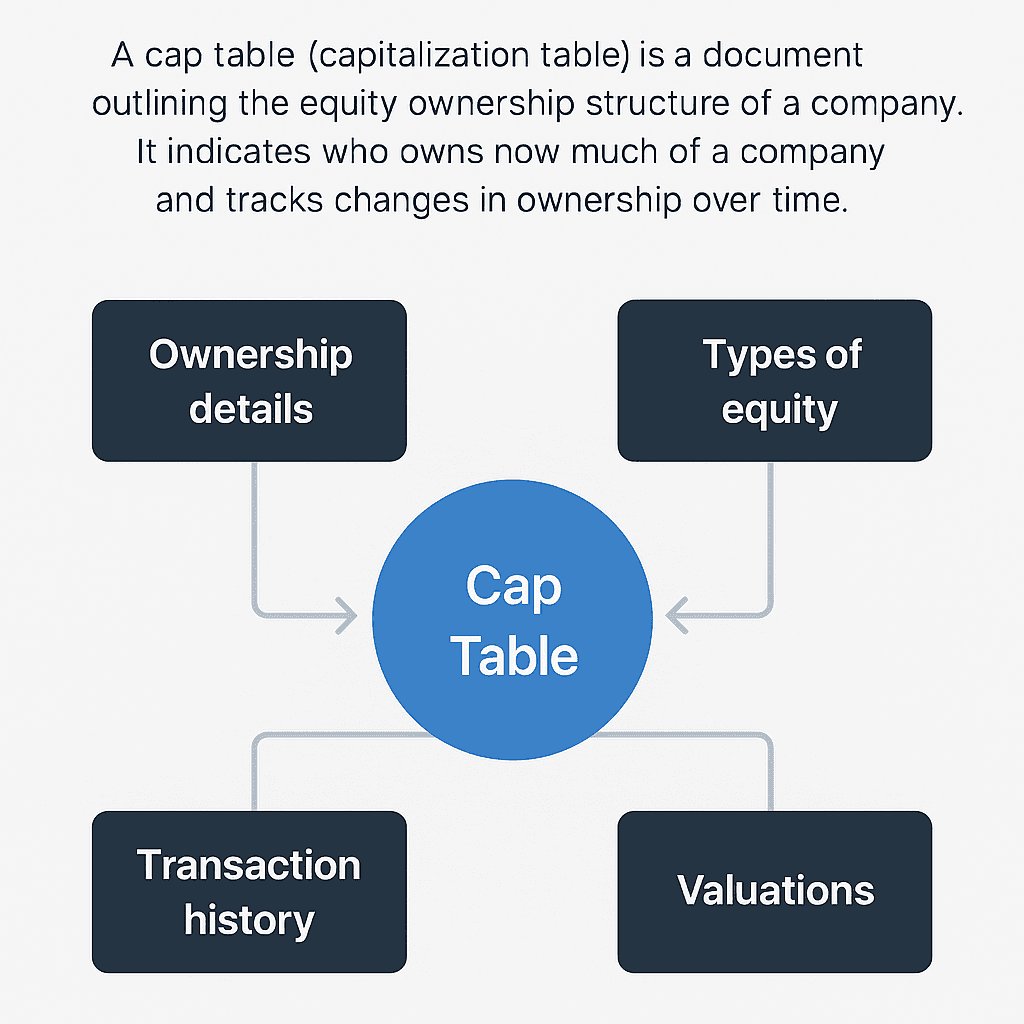
It details:
- Shareholders
- Number and type of shares
- Equity percentages
- Convertible instruments (SAFEs, Notes)
- Option pools
- Valuation events
Why it matters:
- You need it during fundraising and due diligence
- Tracks dilution across funding rounds
- Used for modeling exits or IPO scenarios
Structure of a Cap Table
Think of the cap table as a spreadsheet that moves with the company.
At the Seed stage, it's a short list:
- Founders and their shares
- Pre-seed investors
- Equity pool (optional)
By Series A, it includes:
- Preferred shares (Series Seed, A)
- Convertible instruments converted
- Option grants and exercises
- Price per share and valuation history
As the company grows, the document starts carrying real weight for:
- Strategic planning
- Stakeholder transparency
- Regulatory compliance
Key Components of a Cap Table
Most cap tables include the following.
1. Ownership Details
- Names of all shareholders
- Number of shares
- Equity percentages
- Roles (Founder, Investor, Employee, Advisor)
2. Types of Securities
- Common stock. Founders, early employees
- Preferred stock. Investors with privileges
- Stock options. For employees and advisors
- Warrants. Promised shares to external parties
- SAFEs / Notes. Convert to equity in future rounds
3. Share Classes
- Example: Class A Common, Series Seed Preferred
- Each has different rights (e.g. voting, liquidation)
4. Transaction History
- All funding events
- Option grants & exercises
- Share transfers
- Secondary sales
5. Valuation & Price Data
- Pre/post-money valuation
- Price per share (e.g., $1.50 Series A)
- 409A valuation for stock options
6. Dilution Modeling
- Forecasts dilution across future rounds
- Drives founder and investor negotiations
7. Exit Scenarios
- Shows payouts under M&A, IPO, or liquidation
- Matters most for preferred shareholders
Common Formats of Cap Tables
- Spreadsheet (Excel/Google Sheets): Best for early stages. Lightweight, manual.
- Cap Table Software (Carta, Pulley, Plox): Automates grants, tracking, dilution modeling, and compliance.
Plox has cap table tools built into your investor data rooms, so investors can see who owns what without leaving the platform.
How to Create a Cap Table
1. Start With the Basics
Collect:
- Authorized shares (e.g. 10M)
- Issued shares
- Shareholder details
- SAFEs or Notes (if any)
2. Add Founders’ Equity
E.g.
| Founder | Shares | Ownership | Vesting |
|---|---|---|---|
| Alice | 4M | 40% | 4 yrs |
| Bob | 4M | 40% | 4 yrs |
3. Add Investors
Track by:
- Round (e.g. Pre-Seed, Seed, Series A)
- Share class (e.g. Series A Preferred)
- Total shares and price paid
4. Add Option Pool
Typically 10 to 20% reserved. Track:
- Granted vs ungranted
- Vesting schedules
Cap Table Example
A simplified version, post-Seed round:
| Shareholder | Shares | Class | Ownership |
|---|---|---|---|
| Alice (Founder) | 4,000,000 | Common | 40% |
| Bob (Founder) | 4,000,000 | Common | 40% |
| Investors | 1,500,000 | Series Seed Pref | 15% |
| Option Pool | 500,000 | N/A | 5% |
Total: 10,000,000 shares
Cap Table Management Best Practices
- Maintain Accuracy: Always match legal docs
- Update Regularly: Every grant or raise
- Plan for Dilution: Simulate round impacts
- Use Software: Avoid Excel errors
- Stay Compliant: 409A, SEC, IRS compliance
- Access Control: Keep it secure yet accessible
Tools for Cap Table Management
| Tool | Features | Ideal For |
|---|---|---|
| Plox | Embedded in investor data rooms, analytics, secure sharing | Founders raising funds |
| Carta | Enterprise-grade, 409A valuations | Growth-stage companies |
| Pulley | Intuitive and startup-friendly | Early-stage startups |
| Eqvista | International support, compliance | SMBs & legal firms |
With Plox, you share your cap table with investors securely, track views, see what they spent time on, and control access on the spot.
In Summary
Every startup needs a clean cap table. It shows who owns what, how that shifts over time, and what happens when the big decisions land.
Manage it well and you get fewer headaches during fundraising, better investor conversations, and clarity for everyone involved over the long run.
Bonus: Want to impress VCs during fundraising?
Use Plox to:
- Share your cap table securely
- Track who opened it and what they viewed
- Bundle it with your pitch deck and financials
- Make your data room investor-ready in minutes

Written by Rohan Nayak · Co-founder, Plox
Rohan co-founded Plox. He spends most of his time with founders working out how to share a deck or a data room without losing control of it.
Connect on LinkedIn