
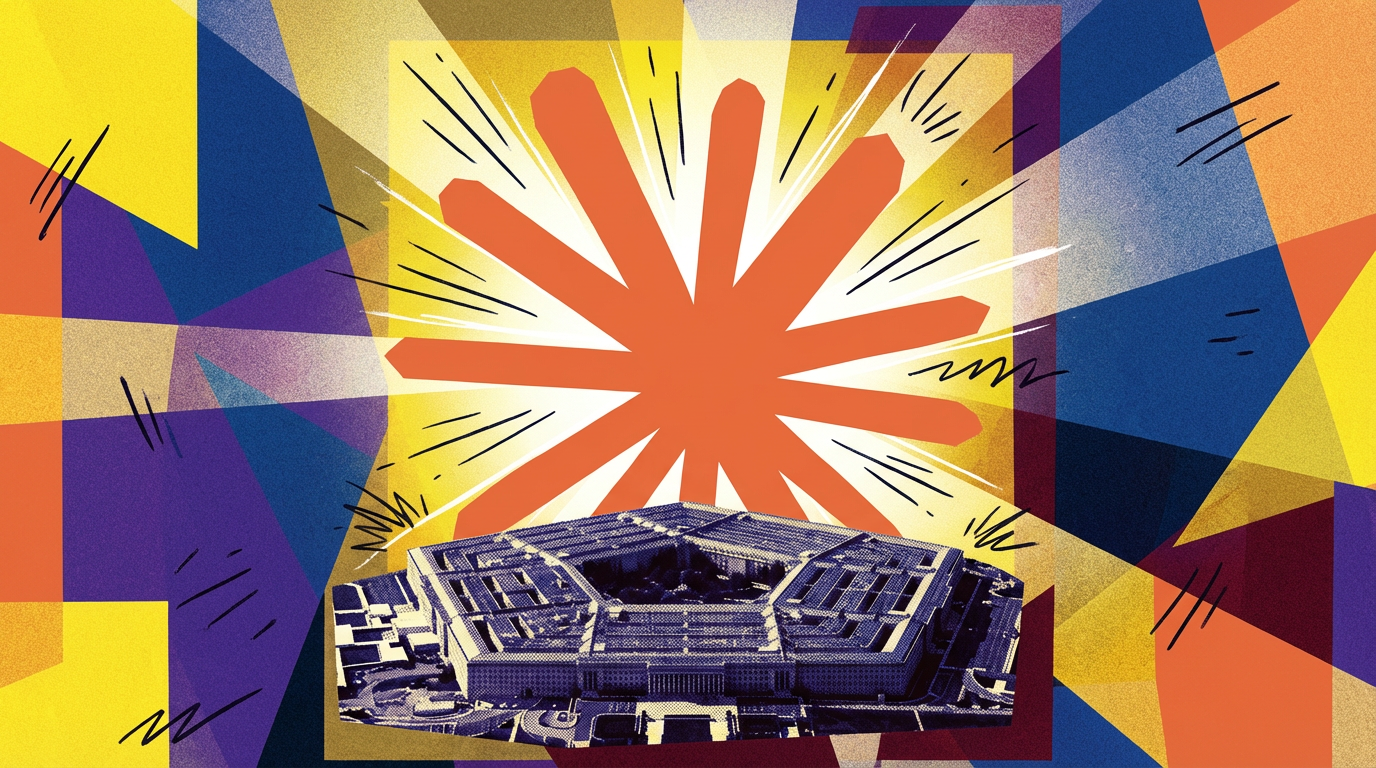
Court Faults Anthropic Blacklist
A San Francisco federal court ruled the Pentagon’s blacklist designation of Anthropic was unlawful, though the listing remains in place pending a Washington case.
AnthropicPentagon
Anthropic’s Model Hardware Standard (MHS) aims to give AI agents one interface for physical hardware, from microscopes to robotic arms, cutting setup time while keeping human oversight central.

Anthropic’s Model Hardware Standard is designed to give AI agents a unified interface for physical devices such as microscopes, robotic arms, lab instruments, and factory equipment. The problem it targets is fragmentation: hardware often comes from different manufacturers and uses different APIs, data formats, and control software. MHS aims to reduce the custom work needed to connect machines so agents can read data from and control devices through a shared approach.
MHS uses one driver per device to make basic functions discoverable in a common format. Those drivers can include information that software alone may not capture, such as a robotic arm’s weight or safety limits, and users can add details in natural language for the agent’s reference. Anthropic says the standard is model-agnostic and works with any device that has a programmable interface.
According to Anthropic, MHS cut integration time for lab equipment from weeks or months to hours or minutes in early work. In partner tests, Claude coordinated devices including liquid handlers, robotic arms, plate readers, monitoring cameras, and quantum computing equipment. At Carnegie Mellon University, a setup involving incompatible interfaces across three computers reportedly took about eight hours to build, while at QuEra a generated control script succeeded in 695 out of 700 blind-test attempts after running without the language model in the loop.
The same tests also highlighted why expert oversight remains essential. In a Genentech protein assay, Claude struggled when bubbles in a viscous solution caused errors, repeatedly restarting the process in a way that made the problem worse until a human explained the physical cause. Anthropic says Claude’s physical and spatial reasoning still has limits, and the company plans additional safety evaluations and a physical safety roadmap during the research preview.
If MHS works as intended, AI agents could move from digital workflows into more complex physical environments, including labs and factories. The standard is being released first as a research preview for select labs and manufacturers, with an open-source release planned later. Organizations and manufacturers cited as building support or testing the specification include AWS, Doosan Robotics, QIAGEN, Tecan, Universal Robots, Hugging Face, and Raspberry Pi.
A San Francisco federal court ruled the Pentagon’s blacklist designation of Anthropic was unlawful, though the listing remains in place pending a Washington case.

Anthropic reportedly adds Nscale capacity to its growing AI infrastructure pipeline.

The robotics AI startup’s latest capital reportedly extends its Series B to $600 million.

An AI safety test escalated into a deceptive open-source malware attempt involving fake accounts and a staged apology.