

Healthleap raises $38M
The healthtech startup is scaling AI that flags hospital patients for closer review without making diagnoses.
HealthTechAI
ClearJet raised a $25 million Series B led by Edison Partners to grow its AI-enabled logistics model that uses unused cargo space on commercial flights.

ClearJet, an Austin-based AI-enabled logistics technology startup, raised a $25 million Series B led by Edison Partners. The round brings the company’s total funding to $40 million since its 2022 inception, with returning participation from Venture53, Origin Ventures, SaltVC and SpringTime Ventures.
The company is positioning itself as an asset-light alternative to traditional parcel carriers by connecting shippers with unused cargo capacity on commercial passenger flights already moving between U.S. cities.

ClearJet does not own the planes moving its packages. Instead, its “Uber for cargo” approach taps available capacity on commercial flights and pairs it with sorting, screening and final-mile delivery relationships.
The company says its network spans 95 U.S. airports and can cut shipping costs by as much as 35% while speeding deliveries by one to three days. Its customers include major multibillion-dollar retailers, e-commerce platforms, 3PLs and marketplaces.
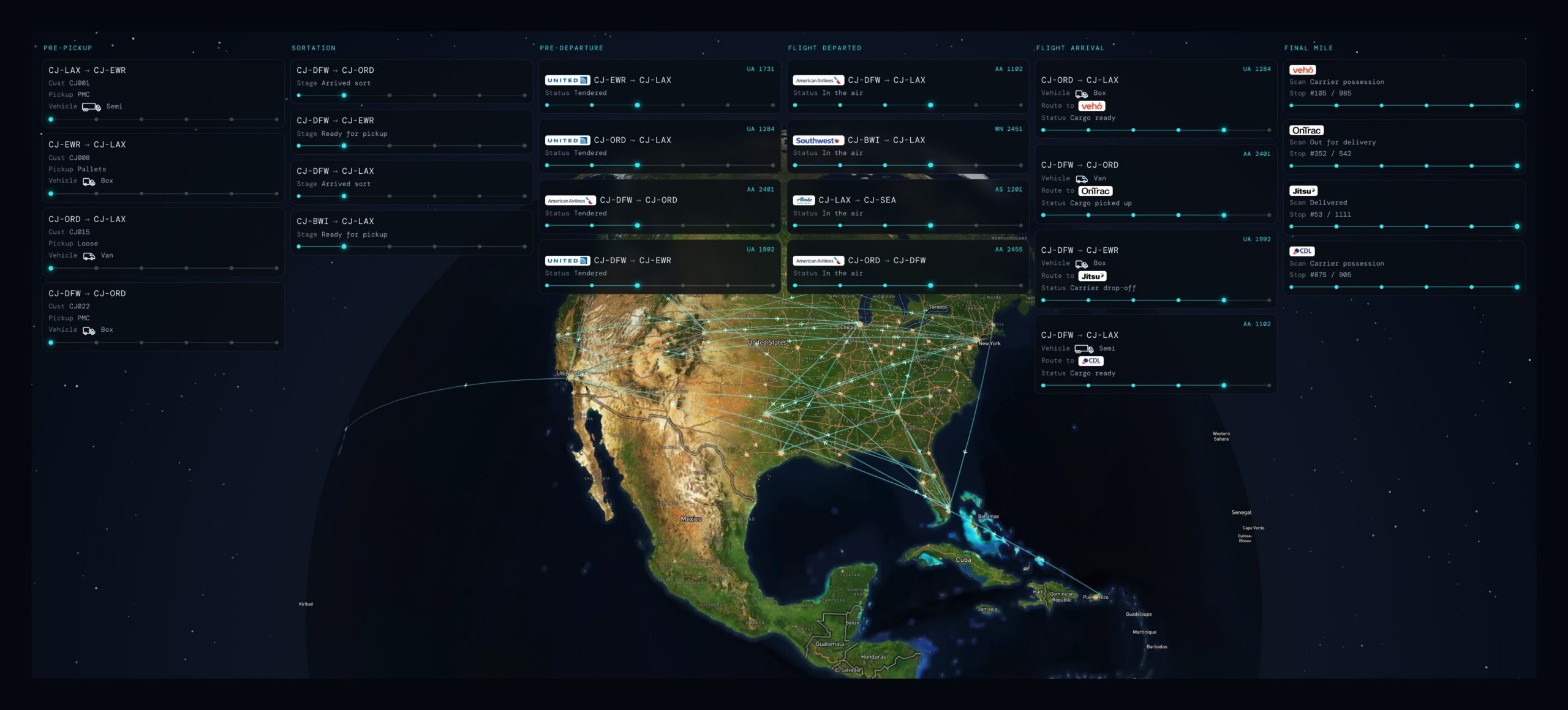
Retailers connect through ClearJet’s API and can generate a two-day shipping label. ClearJet then picks up packages, moves them to an airport, handles sorting and screening, places them on commercial flights, and injects them into final-mile networks at the destination.
Final-mile providers can include FedEx, the U.S. Postal Service, DoorDash, Uber, OnTrac and Veho, according to Guggenheim. The process is designed to route packages directly between cities rather than relying solely on traditional parcel carrier networks.
ClearJet’s AI models choose each parcel’s path based on factors including cost, speed and geography. The company is also developing AI agents to automate operational work such as rating, booking, tracking and managing delivery problems.
That flexibility matters because ClearJet is not tied to a single airline; it can reroute packages around disruptions such as weather by moving shipments through different flights or cities.
ClearJet says it moves more than 30 million packages annually, while it sees roughly 1.8 billion U.S. parcels as eligible to move by air. The company is profitable, revenue has more than tripled year over year, and it is approaching nine figures in top-line revenue, according to Guggenheim.
Next, ClearJet plans to expand into returns and international shipping, grow its airport network, and give consumers more detailed visibility into package journeys.
The healthtech startup is scaling AI that flags hospital patients for closer review without making diagnoses.

Musubi’s PolicyLM-1.7B brings decision-model speed and flexibility to real-time content moderation.

The AI cloud startup is seeking up to $4B before a planned 2027 IPO.

The open source document editor is keeping AI out of its default installation for privacy reasons.