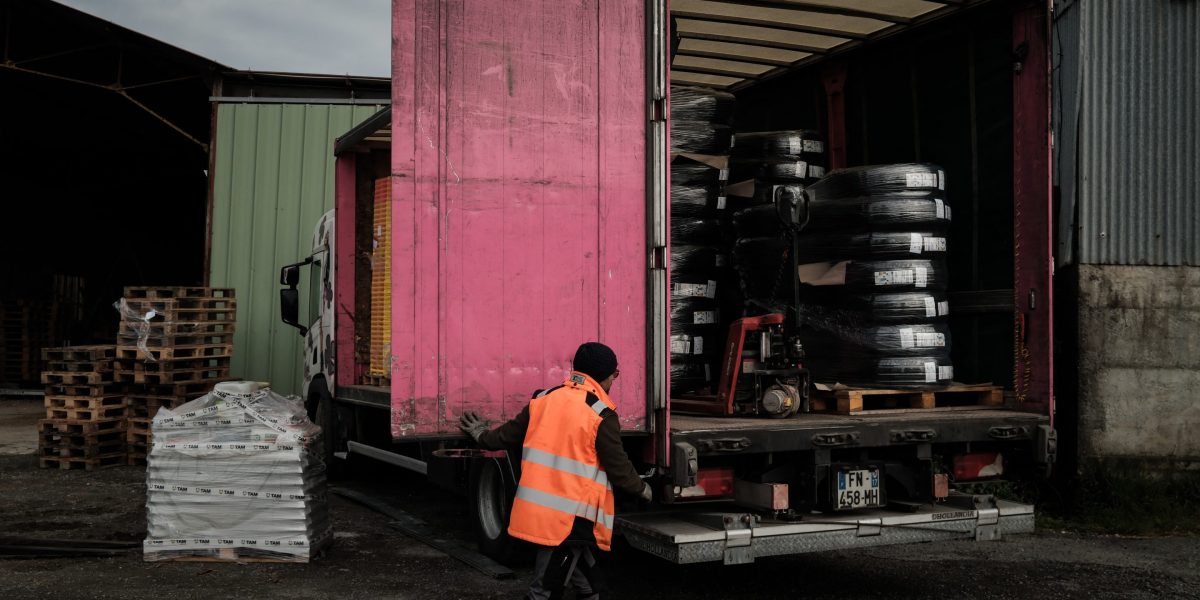
Organized crime rings are hijacking AI supply chains, stealing GPUs and data center equipment worth millions to resell on foreign black markets. Here's how big the problem is—and how it works.
Organized crime rings are systematically hijacking AI hardware shipments—servers, semiconductors, and copper wire—and funneling them onto foreign black markets. Cargo theft hit $725 million in 2025, with electronics making up 22% of stolen goods, driven by insatiable global demand for AI infrastructure components.
Fortune
Organized crime is building an AI hardware cargo theft economy: 'The economics have become just crazy from the criminal opportunistic perspective'
Fortune
Organized crime is building an AI hardware cargo theft economy: 'The economics have become just crazy from the criminal opportunistic perspective'
TechRadar
Organized criminals are increasingly targeting data center cargo
Tom's Hardware
Cargo thieves target AI data center supplies in $1.3 million heists

Cargo theft has existed for centuries, but the AI buildout has given organized criminals a lucrative new target. According to data analytics firm Verisk CargoNet, cargo theft reached $725 million in 2025, with the average value per theft rising from roughly $200,000 to nearly $275,000 year-over-year. Electronics accounted for 22% of all stolen goods, according to supply-chain risk management firm Overhaul. In just the first three months of 2026, there were already 767 theft incidents totaling $132 million in losses. The data center boom—projected to reach a $7 trillion market by decade's end—has made AI hardware supply chains an increasingly high-value target for international crime rings.

Recent incidents illustrate the scale and sophistication of these crimes. In June 2026, the Cook County Sheriff's Office in Illinois recovered two trailers outside Chicago containing approximately $1.3 million worth of stolen goods: $300,000 in copper wire stolen from Alabama and roughly $1 million in data center infrastructure equipment stolen from Jacksonville, Florida. In a separate incident, a truck shipment managed by Ceva Logistics and containing about $15 million in semiconductors and Apple products was stolen in Nevada; authorities found the empty trailer 280 miles away in California two weeks later. In December 2024, thieves stole more than $7 million in Nvidia chips from a California warehouse within a day of its scheduled delivery to a San Jose Supermicro facility.
According to David Warrick, executive vice president of supply-chain risk management firm Overhaul, these are not opportunistic thefts—they are orchestrated by international criminal syndicates that operate like corporations. These networks have infiltrated supply chains at multiple levels, including drivers and warehouse operators, and exploit weak points to redirect shipments. Stolen AI hardware is smuggled to countries like China, Russia, and Iran, where U.S. export bans on domestic AI technologies have created strong black-market demand. The Financial Times reported that the price of Nvidia's RTX 6000 Pro chip on the Chinese black market more than doubled since the start of 2026. The FBI issued a public service announcement in April 2026 warning that cyber threat actors are using spoofed emails, fake URLs, and ghost carrier schemes to hijack freight at scale.
Logistics companies and manufacturers are adapting. Countermeasures now include GPS trackers embedded in trailers, serial numbers stamped on materials, software to verify driver credentials and paperwork, and generative AI engines to monitor cargo in real time. Overhaul's platform processes 30 billion data points and ingests roughly 250 million new data points monthly. However, experts caution that the difficulty of reselling highly specialized enterprise hardware—which typically requires proof of ownership documentation—provides some natural friction against theft rings. Verisk CargoNet VP of Operations Keith Lewis noted that criminal enterprises are becoming 'more selective and sophisticated, targeting extremely high-value shipments rather than relying on opportunistic theft.' Warrick summarized the challenge plainly: 'We're having to evolve not only with technology, but because we understand that this is an arms race.'

Organized crime rings are hijacking AI supply chains, stealing GPUs and data center equipment worth millions to resell on foreign black markets. Here's how big the problem is—and how it works.