

AWS ends data center NDAs
Amazon says AWS has stopped using NDAs with government agencies amid data center scrutiny.
Amazon Web ServicesData Centers
Cargo theft hit an estimated $725 million in 2025, with organized crime rings increasingly targeting AI infrastructure—servers, GPUs, and data center equipment—to sell on foreign black markets. Industry experts and law enforcement warn the problem is accelerating as the AI buildout creates hardware shortages and multimillion-dollar opportunities for international smugglers.
Fortune
Organized crime is building an AI hardware cargo theft economy: 'The economics have become just crazy from the criminal opportunistic perspective'
CargoNet
2025 Supply Chain Risk Trends Analysis
FreightWaves
$1.3M in stolen copper wire and data center equipment recovered near Chicago
justice.gov
U.S. Citizens and Chinese Nationals Arrested for Exporting Artificial Intelligence Technology to China
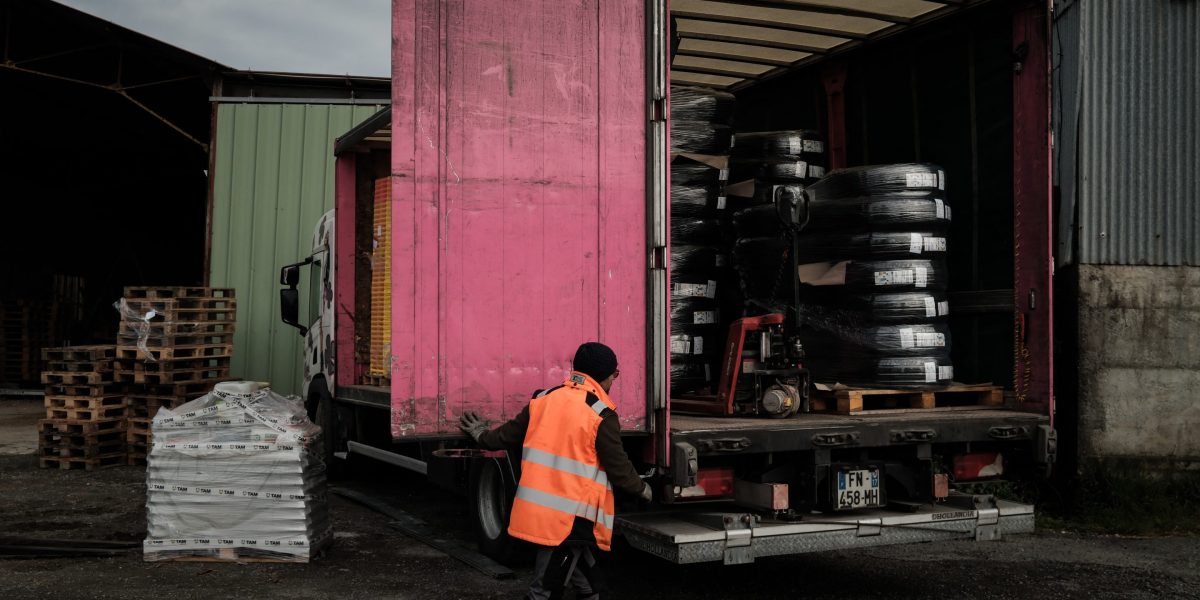

Cargo theft reached an estimated $725 million in 2025, a 60% surge from 2024, according to Verisk CargoNet's annual analysis. Although the total number of supply chain crime events held relatively steady—3,594 in 2025 versus 3,607 in 2024—confirmed cargo theft incidents rose 18% year-over-year, from 2,243 to 2,646. Critically, the average value per theft jumped 36% to $273,990, reflecting a deliberate pivot by criminal enterprises toward higher-value shipments. Electronics accounted for 22% of all thefts last year, with enterprise computing hardware and cryptocurrency mining equipment emerging as top-tier targets.
With the data center boom projected to reach a $7 trillion market by the end of the decade, organized crime rings have zeroed in on AI supply chains as a lucrative target. The AI hardware buildout has created severe shortages—including a memory chip 'RAM-ageddon'—driving black market prices sky-high. According to the Financial Times, the price of Nvidia's RTX 6000 Pro workstation chip on the Chinese black market more than doubled in early 2026 alone. "The economics have become just crazy from the criminal opportunistic perspective," said David Warrick, executive vice president at supply-chain risk management firm Overhaul. This new shadow economy first emerged shortly after ChatGPT's release and has been gaining steam ever since, tracking the pace of the AI buildout itself.

These are not opportunistic thieves—they are international syndicates that, according to Warrick, "run like big corporations" and have penetrated supply chains at every level, from drivers to warehouse operators. Criminals exploit weak points through ghost carriers, fraudulent pickups, and increasingly, cyber-enabled tactics: the FBI issued a public service announcement in April 2026 warning that threat actors are using spoofed emails and fake URLs to hijack freight and reroute deliveries. Stolen goods are smuggled to countries such as China, Russia, and Iran—where the U.S. government has imposed export bans on domestic AI technologies—generating enormous profit margins. In one recent case, Cook County Sheriff's investigators near Chicago recovered two stolen trailers containing $1.3 million in cargo: approximately $300,000 in copper wire and $1 million in data center infrastructure equipment, stolen from Alabama and Florida respectively.
Federal authorities have escalated enforcement actions targeting AI hardware smuggling. In November 2025, the DOJ announced charges against four individuals—two U.S. citizens and two Chinese nationals—for conspiring to illegally export hundreds of Nvidia A100 and H100 GPUs to China through Malaysia and Thailand, receiving over $3.89 million in wire transfers from the PRC to fund the scheme. On the industry side, logistics firms are adapting with new software to verify driver credentials and shipment paperwork, and are deploying generative AI to track cargo in real time. Verisk CargoNet expects organized groups to continue targeting high-value tech products in 2026—particularly RAM modules, storage drives, and enterprise computing equipment—while also increasing sophisticated misdirection schemes targeting legitimate carriers.
Amazon says AWS has stopped using NDAs with government agencies amid data center scrutiny.

Goldman Sachs projects a massive AI infrastructure spending cycle by 2027, with power, labor, and memory chips as key constraints.

Google wants to test orbital AI infrastructure powered by solar energy, but scale, cooling, radiation, and launch costs remain major hurdles.
Mars and Walmart are using AI to plan candy and costume inventory as Halloween shopping starts earlier.