
![Image of founder getting a "Blank check" [Dom Guzman]](https://news.crunchbase.com/wp-content/uploads/rise-of-massive-funding-blank-check.jpg)
Jumbo Series A Rounds Rise
AI is driving a surge in $100M-plus Series A funding rounds globally.
Series AAI
Crunchbase News highlights why Black founders’ next big venture challenge is not just getting initial funding, but raising enough seed capital to reach Series A milestones in an AI-shaped startup market.
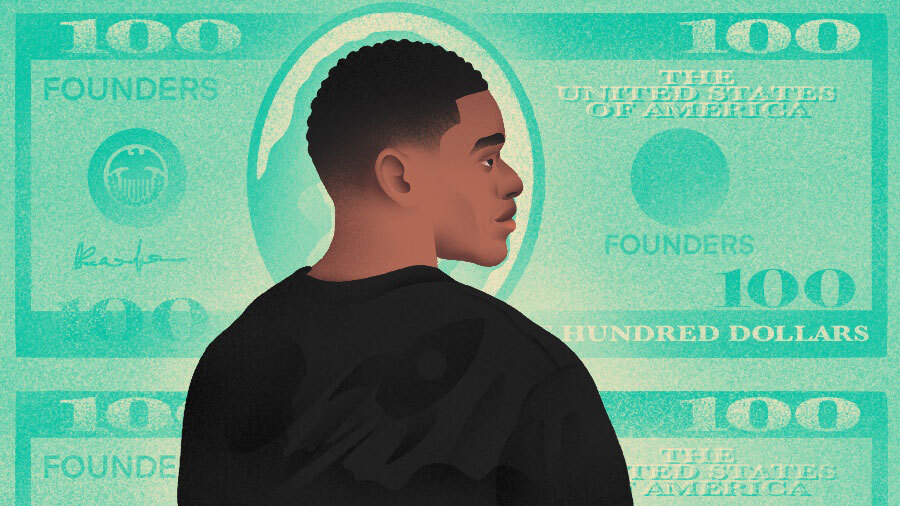
James Norman and Sean Green argue that the core challenge for Black founders is increasingly the path from seed funding to Series A. AI has lowered the cost of building software startups, but the article stresses that scaling still requires capital for customer acquisition, experienced talent, go-to-market work, revenue growth and investor-ready metrics.
The practical takeaway: early capital is no longer just about launching a product. It is about giving founders enough runway to prove a business can grow.

The article pushes back on the idea that AI means startups simply need less money. Because AI helps teams build faster, investors are placing more weight on real traction, recurring revenue, customer retention, capital efficiency and repeatable growth before a Series A.
For founders, that means seed rounds must support proof-building, not just experimentation. The strongest position is having enough capital to focus on customers and execution instead of restarting the fundraising cycle every few months.
Crunchbase data cited in the article says U.S. startups with a Black founder or co-founder received $942 million in venture funding in 2025, representing 0.32% of all U.S. venture capital invested. The article contrasts that with 2021, when Black founders raised $5.2 billion during the post-George Floyd investment surge.
There were encouraging signs in 2026, with Black-founded startups raising approximately $643 million by late May. But the article notes that the improvement was driven largely by a small number of unusually large financings, including a $350 million AI round.

Norman and Green frame oversubscribed seed rounds as more than a signal of investor demand. In the current market, extra capital can give Black founders flexibility to handle slower fundraising conditions, pursue growth opportunities and keep building toward Series A requirements.
The central implication is clear: access to capital matters, but adequate capital matters even more. In an AI economy, Black-led startups may need enough early funding not only to build quickly, but to keep building long enough to compete.
AI is driving a surge in $100M-plus Series A funding rounds globally.

The startup is building an AI assistant that identifies email commitments and helps complete related tasks across tools.

17 startups raised $61.8 million, led by Flam’s $40 million Series B.

Fundable seed startups are prioritizing GTM, distribution, focus and AI infrastructure.