

Huawei’s 2027 AI Chip Push
Huawei plans to launch its Ascend 960DT AI chip in Q1 2027, ahead of its previous Q3 timeline.
HuaweiAI Chips
ASML has secured commitments from major chipmakers for larger photomasks that could raise High-NA EUV throughput, while Huawei coordinates China’s effort to reduce reliance on foreign lithography technology.
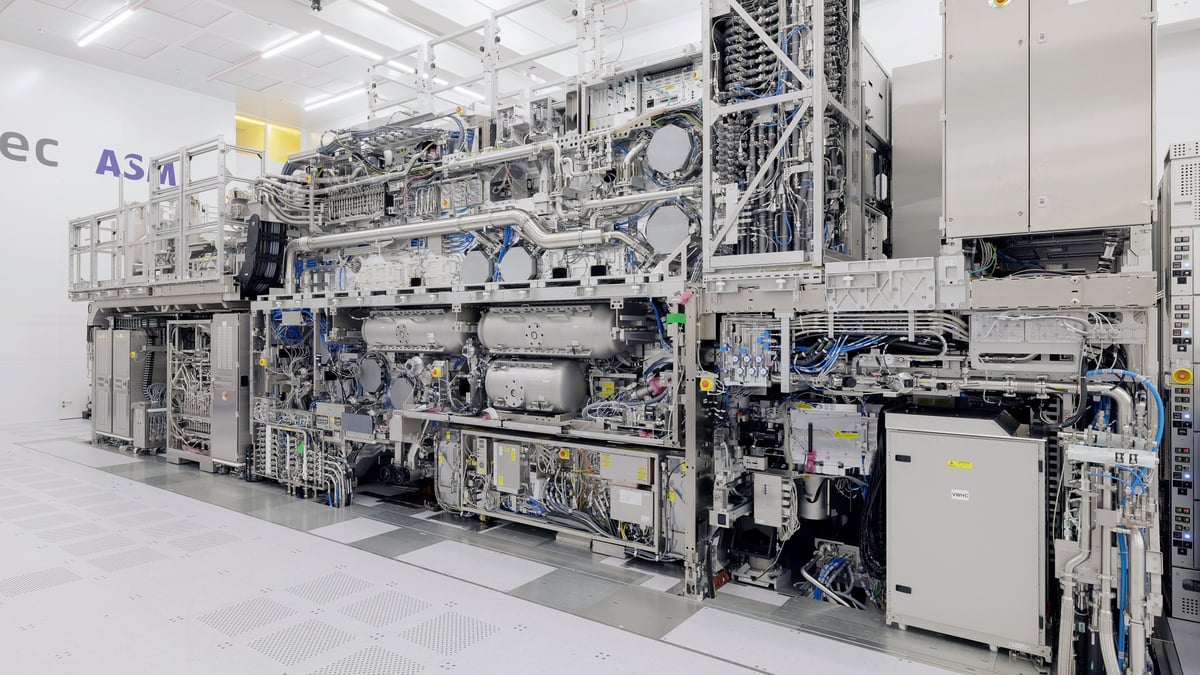
ASML has won commitments from Samsung, TSMC and Intel to adopt its newest production technology. Samsung plans to use High-NA EUV lithography machines for high-volume manufacturing starting in 2028, while TSMC is expected to follow in 2030; Intel already has the machines running. The move strengthens ASML’s position in one of the most important bottlenecks for advanced AI chip production.
The companies plan to move from today’s six-inch photomasks to twelve-inch masks. A photomask acts like a stencil for transferring circuit patterns onto silicon wafers, and a larger mask can image more area in a single exposure. According to the provided article, the change could raise High-NA machine throughput by 40 percent and simplify chip design, though the shift has long been viewed as complex and costly.
ASML and TSMC plan to build a test line for twelve-inch masks by 2031, with production use on High-NA tools set for 2033. TSMC’s reversal is notable because it had previously argued that productivity gains did not yet justify higher costs. Samsung’s plans also matter because the company is a major memory maker and intends to use High-NA for memory chips starting in 2028.
Huawei is working to reduce China’s dependence on foreign semiconductor equipment and Western-controlled supply chains. The effort centers on DUV lithography rather than the most advanced EUV systems, with Shanghai-based Yuliangsheng tied to China’s advanced DUV machine development. The article identifies projection lenses and light sources as key bottlenecks, while Huawei’s investment activity points to a broader attempt to build a domestic supplier base.
The story highlights two parallel strategies: ASML is deepening its role with the world’s leading chipmakers, while Huawei is coordinating a domestic workaround for China. For readers tracking AI hardware, the important milestones are Samsung’s 2028 High-NA use, TSMC’s 2030 adoption, the 2031 mask test line and 2033 production target. The core question is whether ASML’s throughput gains widen its lead faster than China can reduce its dependence on foreign lithography components.
Huawei plans to launch its Ascend 960DT AI chip in Q1 2027, ahead of its previous Q3 timeline.

Reported enterprise server could use M8 Ultra chips and Nvidia NVLink Fusion.

AI software and semiconductors drove August’s new Crunchbase Unicorn Board entrants.
Rene Haas sees major promise for AI in health, but says computing power and chip supply remain key limits.