
![Computer generating AI data. [Dom Guzman]](https://news.crunchbase.com/wp-content/uploads/AI-generated.jpg)
Groq Investor’s AI Playbook
Sandhya Venkatachalam explains how Axiom Partners evaluates durable AI startups and why early-stage risk is part of the model.
AIVenture Capital
SK Hynix posted a record stock drop in South Korea after its blockbuster US ADR debut, pressuring Korean and global chip stocks as investors questioned AI-trade valuations.
SK Hynix’s Korea-listed shares closed 15.4% lower on Monday, marking the stock’s steepest decline on record, just one trading day after its Nasdaq debut. The company’s US listing raised $26.5 billion, making it the biggest foreign stock offering in US history and topping Alibaba’s $25 billion IPO from more than a decade earlier.
The decline followed a months-long rally, with investors locking in gains after the closely watched ADR listing. SK Hynix’s ADRs opened Friday at $170, about 14% above the $149 reference price, and finished their debut session up 12.8%.
The move hit more than SK Hynix. Samsung Electronics fell more than 10%, and losses in the two index heavyweights pushed South Korea’s Kospi sharply lower.
The benchmark index triggered a 20-minute trading halt after a circuit breaker was activated for the seventh time this year, then closed nearly 9% lower. The pressure also appeared in Western chip stocks, with AMD and Intel dropping 5% at the open and Nvidia down 1.5%.
The sell-off came as Asian markets broadly retreated amid renewed tensions in the Middle East and questions about whether the AI-driven rally had run ahead of fundamentals. Japan’s Nikkei 225 fell about 2%, while memory chip stock Kioxia slumped nearly 13%.
US markets were mixed early Monday: the Nasdaq was down 0.9%, the S&P 500 was 0.3% lower, and the Dow Jones opened with a small 0.1% gain. For investors, the takeaway is that AI and memory-chip enthusiasm remains powerful, but valuation sensitivity is rising.
Despite the pullback, analysts cited in the report remained broadly constructive on SK Hynix, whose Korea-listed stock has nearly doubled this year. Morningstar valued the company’s ADRs at $160 and Korea-listed shares at 2.4 million won each, implying the stock was fairly valued.
Morningstar analyst Lorraine Tan wrote that the current memory upcycle is tracking stronger than expected, while still assuming normalization in cycle dynamics that limits upside at current levels. The rout left SK Hynix’s US ADR trading at about a 37% premium, a valuation gap analysts are watching closely.
Sandhya Venkatachalam explains how Axiom Partners evaluates durable AI startups and why early-stage risk is part of the model.

Huawei plans to launch its Ascend 960DT AI chip in Q1 2027, ahead of its previous Q3 timeline.

AI software and semiconductors drove August’s new Crunchbase Unicorn Board entrants.
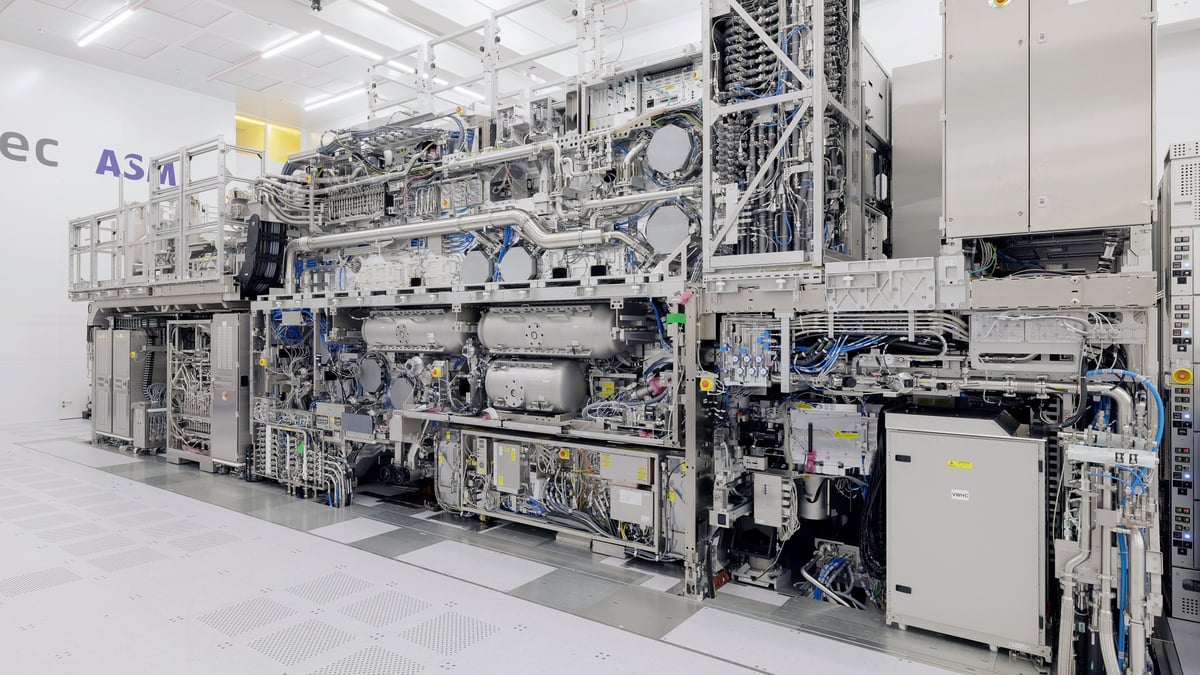
TSMC, Samsung and Intel back ASML’s next EUV step as Huawei advances a DUV-focused alternative strategy in China.